
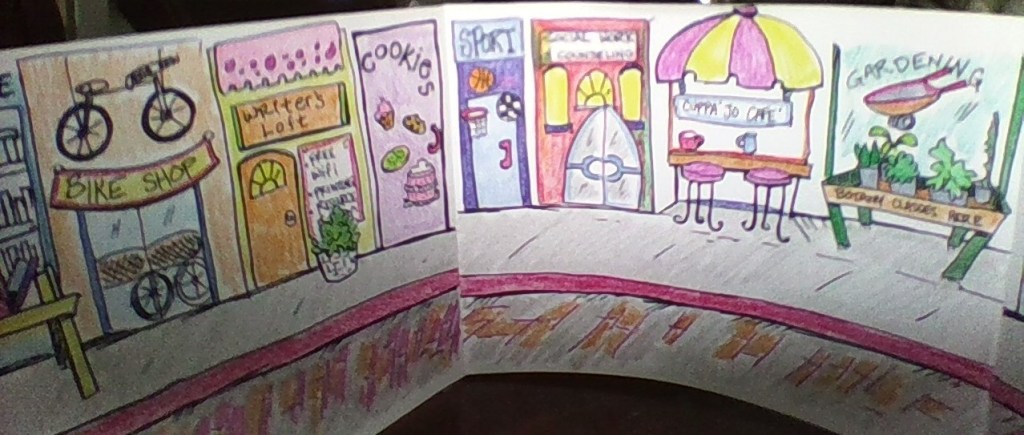
Dissociative Identity Disorder is a severe response to childhood trauma, it used to be called multiple personality disorder, but it is really a strong coping skill and it occurs on a spectrum.
It is not what Hollywood portrays, and this writer is against using mythical and boogey-man stereotypes of this and any other mental illness because it is degrading, exploitative, dehumanizing, and makes the sufferers more isolated as they try to cover for their problems due to the scary stigmas and shame Hollywood and media uses them for.
Dissociation is where a person — usually a child — experiences a trauma so pervasive and overwhelming and they are so trapped in a living situation with the source of their trauma that their immature and still-forming personality splits off into many parts, each part becoming a personality of its own.
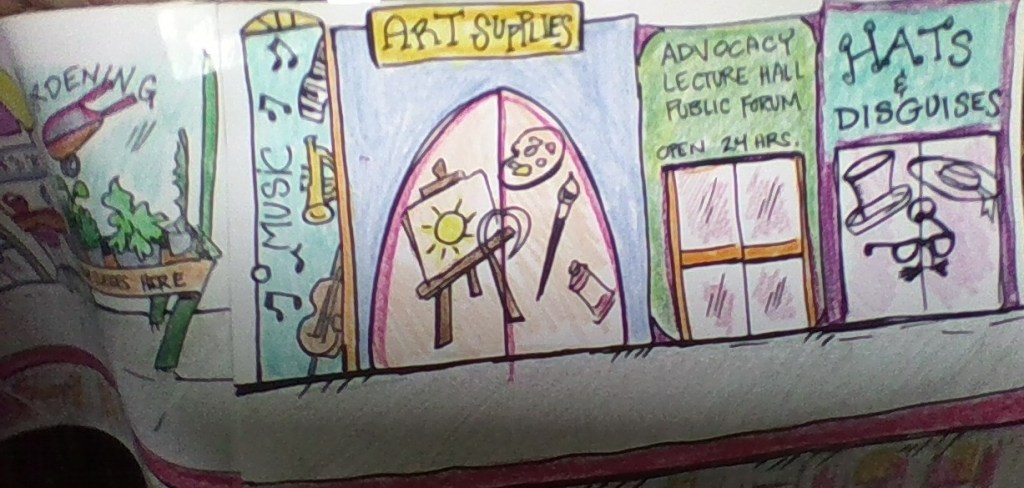
Dissociation is about hiding, making a disguise to go forward on the outside and associate with the tangible world with tangible people and tasks, while hiding behind the disguise in refuge and an inner place of safety. Usully each personality is assigned core strengths or talents or abilities on the outside, or on the inside.
The goal of therapy used to be integration, or merging all the personalities into one united, viable personality which will always be constant and consistent in their performance and experiences in the outer environment.
This is not possible and sets up the client for failure and shame, and can become abusive as the therapist attempts to weild power and authority to accomplish this unreasonable goal.
The more reasonable, and respectful goal for a dissociative client is to get all the personalities on the inside to form a working community, where they cooperate, contribute, compromise and collaborate.
The inside community usually has a metaphor for their space, some sort of inner geography that can be understood as a gathering place, a shared living space on the inside, and this is very helpful for the client to use to describe their experiences and organize their inner terrain and get the insiders to communicate, collaborate, and compromise.
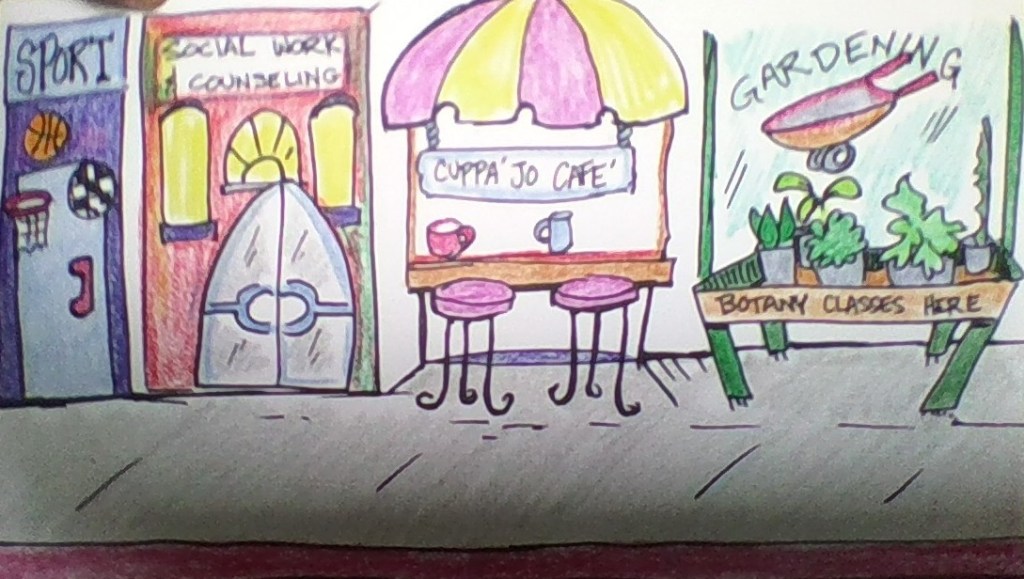
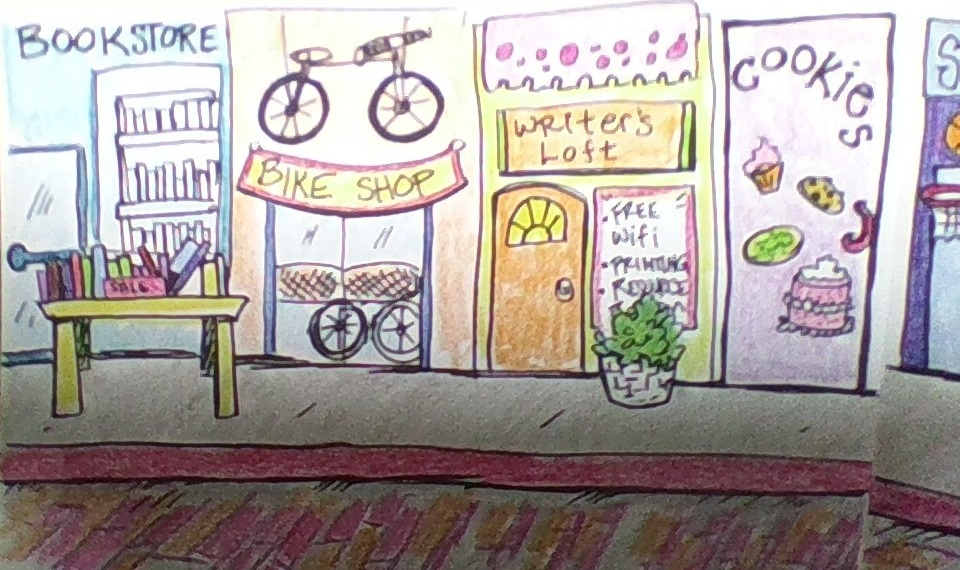
I knew of one person — and it’s with her permission that I illustrated this and included it as an example here — who had a dream one night, a very bright, vivid and satiating dream. when she awoke, she felt completely filled and at peace, like every part of her was safe and nurtured, understood, and had a home. friends, meaningful tasks, and a place to live and grow.
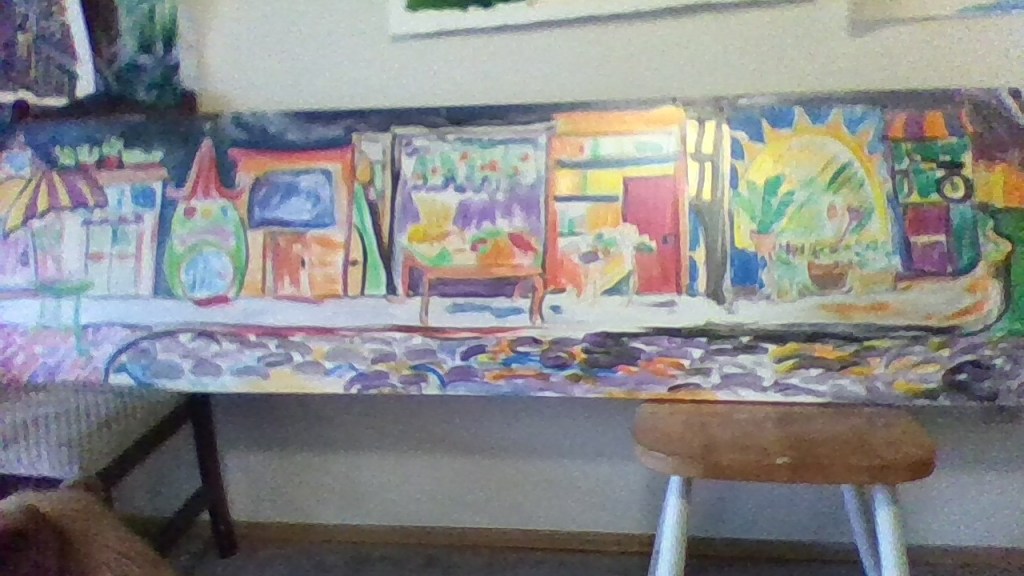
Her dream was about walking down one New York City block. Along this street was a shop or place where she could get every one of her insider’s needs met. There, each insider could thrive, hide away, live in peace, and learn and experience and have all the things they needed to be consistently nurtured and fed and be themselves with others who knew them and loved them and were like-minded and unconditionally accepting.
This street is a metaphor for what persons who suffer dissociation need — on the outside, but also on the private inner terrain which is so uniquely their own.
That is the worthy goal of therapy — to create that kind of inside and outside living space of this one NYC block.

——————————————- To sign up for a trauma masterclass on this subject, or to schedule a consultation, email Heidi at dog.hotel.hansen@gmail.com. Thank you!
 the trauma project